📱 End-to-End Product Design Case Study

Coastals: Luxury Marine Marketplace

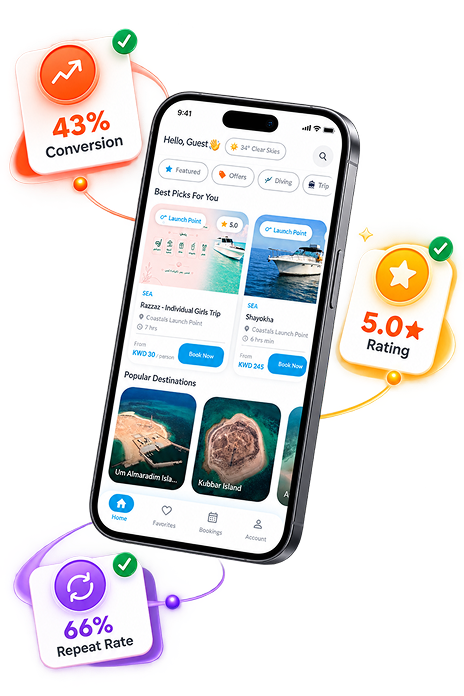
Coastals is Kuwait's first unified platform for booking yachts, kashtas, and desert experiences. I led end-to-end product design for Phase 1: research, interaction design and checkout flows systems that achieved 43% conversion and 5.0 star app store rating.

Timeline
16 Weeks
Scope
End-to-End
My Role
Lead Designer
Team
1 Designer, 3 Engineers & PM

How I Tackled It

The Problem

Booking marine experiences in Kuwait was fragmented. No centralized platform existed for yacht rentals, fishing charters, or water sports. Operators managed bookings manually (WhatsApp, calls). Travelers had no trust signals, price transparency, or booking confirmation.

No Trust Signals

Travelers couldn't verify vessel condition, operator credentials, or pricing. Manual processes felt risky for high-ticket experiences (100–10k+ KWD bookings).

Operator Friction

Operators lost time to booking coordination. No analytics, repeat customer tracking, or automated scheduling. Manual confirmations created bottlenecks.

No Marketplace Network

Fragmented discovery. Travelers didn't know what experiences existed or how to compare options. Seasonal demand went untapped.

The Opportunity

Create a single platform where Kuwaiti residents discover, compare, and book verified local experiences instantly.

Market

Affluent leisure seekers, 18–65

Peak Season

May – September

TAM Focus

90%+ local residents

Research & Problem Validation

USER RESEARCH

I investigated renter behavior

20+
Renters interviewed

Solo, group & family renters across different booking patterns.

What I did

Conducted in-depth interviews and synthesized recurring behaviors, needs, and pain points.

What I found

Renters wanted transparent pricing, instant confirmation, and curated recommendations.

→ Design implication

Remove async approval workflows (adds 24–48hr wait). Offer instant confirmation CTA + upfront cost transparency to reduce perceived risk.
OPERATOR RESEARCH

I mapped operator pain points

8
Operators interviewed

Yacht captains and kashta owners managing bookings.

What I did

Mapped booking, calendar, communication, and payment workflows to identify operational friction.

What I found

Operators were juggling multiple platforms, inaccurate calendars, and manual payment collection.

→ Design implication

Centralize operations instead of adding more features.

!
PROBLEM DEFINITION

I identified 3 problems to solve

01
Trust friction

No verification of vendors or equipment quality.

02
Coordination overhead

Calendar syncing and payment collection were manual.

03
Booking friction

Multi-step inquiry → confirmation workflow.

→ Opportunity

Build trust and make booking feel instant and predictable.

Solution Exploration & Design Concepts

Tested 2 core hypotheses with 8 users each. Both validated and shipped.

CONCEPT 01 ✓ Shipped

Verified Vendor Model

User Testing (n=8)

Verification badges and star ratings eliminated discovery hesitation. Users browsed without second-guessing vendor legitimacy.

87%stated booking intent
CONCEPT 02 ✓ Shipped

Instant Checkout

User Testing (n=8)

Direct payment completion outperformed async approval flow. Eliminating "contact operator" step and enabling instant confirmation doubled completion rate.

89%completion vs. 45% (async control)
✓ Core Finding: Speed and certainty mattered more than feature breadth. Removing friction outpaced adding complexity.

Core Design Decisions

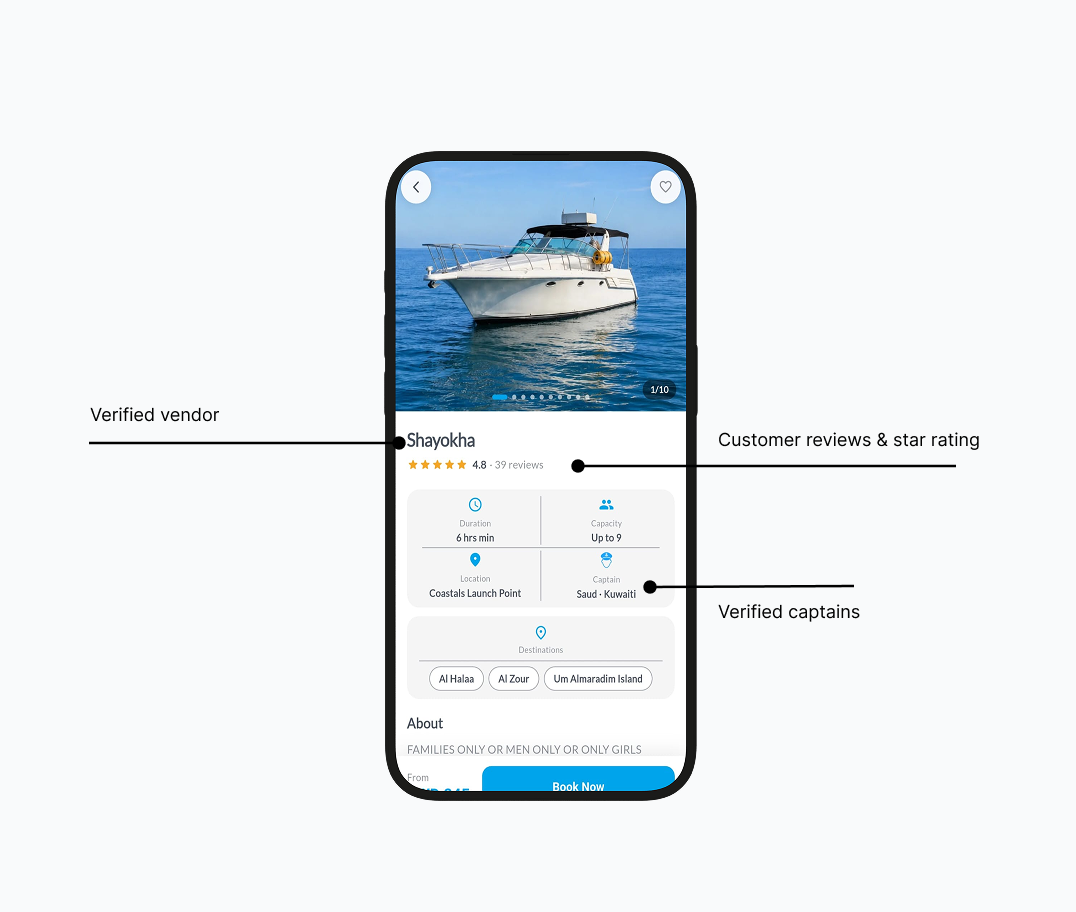
Verified Marketplace

Every listing includes:

  • Verified vendor badge
  • Customer reviews & star rating
  • Detailed specs (capacity, amenities, photos)
  • Verified captains/operators
  • Direct concierge chat
Why

Users distrust unvetted operators. Centralized trust signals reduce risk perception.

Listing with verified badge

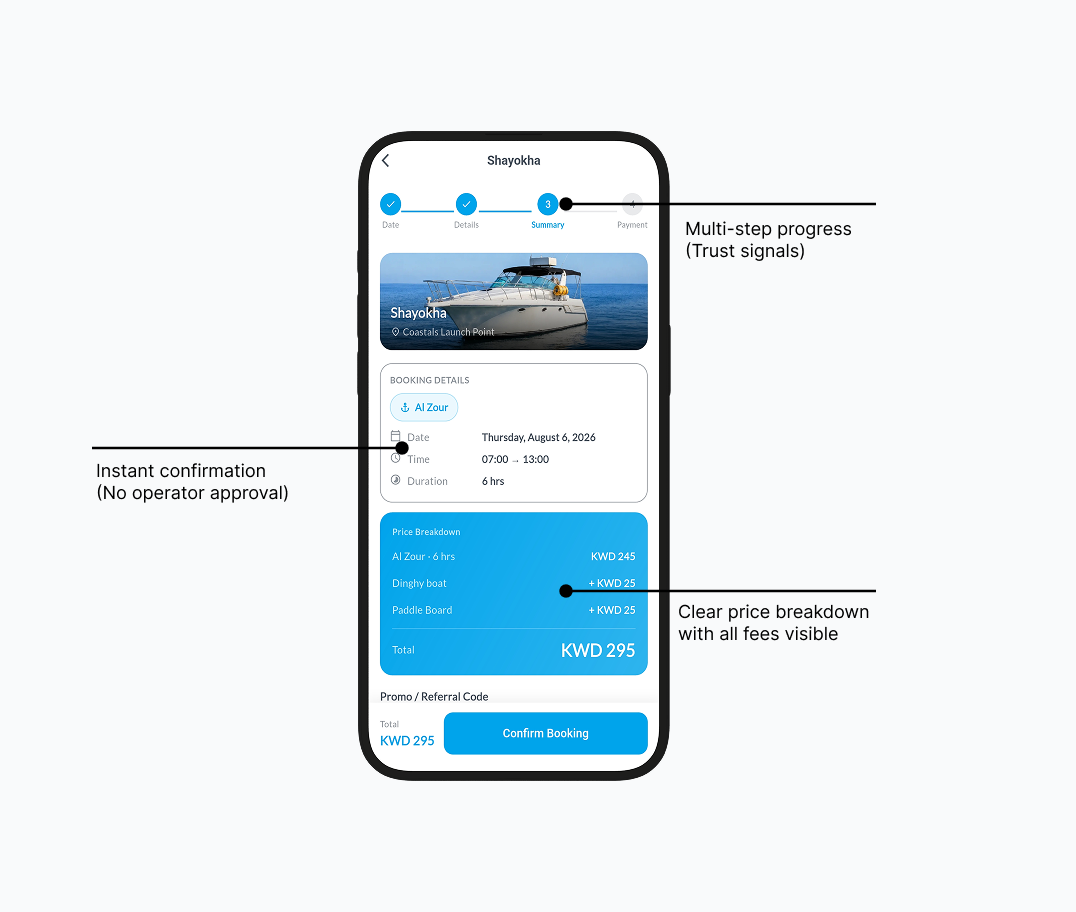
Simplified Checkout (KNET + Payments)

Payment options:

  • Multi-step progress indicator (builds trust)
  • Clear price breakdown with all fees visible
  • Instant confirmation CTA (no operator approval needed)
  • Payment options: KNET, Apple Pay, Bank Transfer
Why

Explains the friction points (risky/unclear payments) and how design solves them (progress + transparency + speed.

Checkout summary
🎯 Design Philosophy: Market-first, not trend-first. Every decision grounded in Kuwait market reality (KNET adoption, operator SLAs, tourist TAM).

Iteration Cycles & Shipping

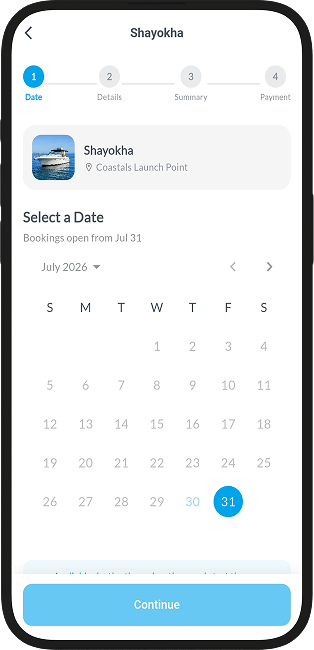
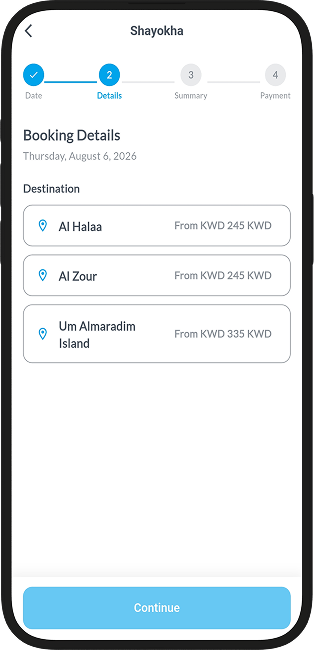
Booking calendar iteration Booking details iteration

Operator Calendar Accuracy Problem

Friction

Only 18% of operators maintained up-to-date availability. Resulted in:

  • 2.1 weather disputes/week
  • ~4.2 hours support time per dispute
  • ~$8K monthly support cost
Solution

Built automated weather holds + operator sync:

  • Auto-block dates when unsafe (wind/rain thresholds)
  • Real-time availability push from operator
  • Instant renter visibility
Shipped

Auto-block unsafe dates + operator push notifications + instant renter visibility.

Outcome: Support disputes reduced significantly. Real-time sync validation worked.

Multi-Party Checkout & Cost Transparency

Group Discovery

Multi-person checkout UI with "split bill" visibility.

Group discovery rate14% → 42% (+200%)

Insight: Placement mattered more than feature design. Prominent "add friends" CTA drove adoption.

Checkout Messaging: Certainty vs. Approval

Hypothesis: Travelers perceive "operator approval" as uncertainty (unknown wait time). "Instant confirmation" signals certainty, reducing perceived risk.

Tested: Control (77% completion) vs. instant confirmation CTA (89% completion).

Winner: +15% completion. Messaging that emphasizes user control (instant) outperformed messaging that emphasizes operator discretion.

Retention Insight

Rebook rate, early adopters89%

Measured 30 days post-first booking — suggests sticky retention mechanics (wallet, favorites, chat history) are working.

✓ Shipping Lesson: Shipped 3 features concurrently (split-bill, calendar sync, weather automation). Isolation is difficult, but data shows all three drove specific metrics.

Interface Design

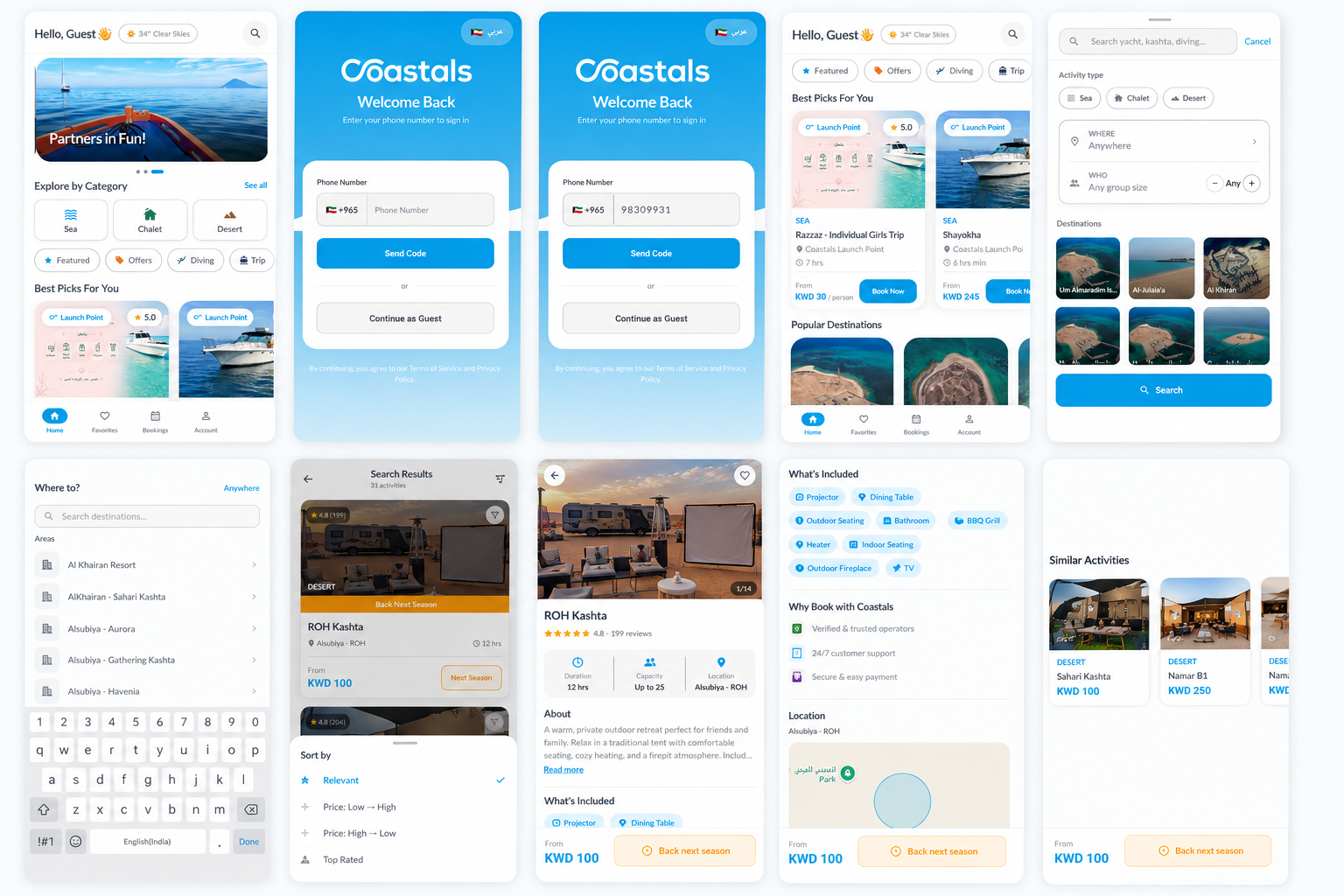
Coastals interface design screens

Overview: Discovery, authentication, search filtering, detailed listing view, checkout flow, and user account management.

Phase 1 Launch Metrics

Early Performance Overview

Total Downloads (Lifetime)
7
Early stage, organic growth
App Store Rating
5.0 ⭐
7 reviews, all positive
Booking Completion Rate
43%
3 paid bookings / 7 downloads

Booking Funnel

1. App Opens & View Fleet
7 (100%)
2. Select Date & Contact Captain
5 (71%)
3. Complete Checkout
3 (43%)
✓ Why This Matters: 43% conversion is unusually high for an unknown marketplace. Suggests strong product-market fit signals: low friction, high intent.

Additional Retention & Payment Metrics

Repeat Booking Rate
66%
Book multiple times per year
Day 90 Retention
71%
5 of 7 users remain active
Avg Booking Value
950 KWD
Per booking, high-intent segment

Payment Method Breakdown

KNET
40%

Standard weekend deposits

Apple Pay
40%

Instant, secure premium auth

Bank Transfer
20%

Corporate invoice wire

✓ Key Finding: Multiple payment options prevented 20% abandonment. Removing any single method would cost approximately 20% in completion rate.

User Feedback & Qualitative Validation

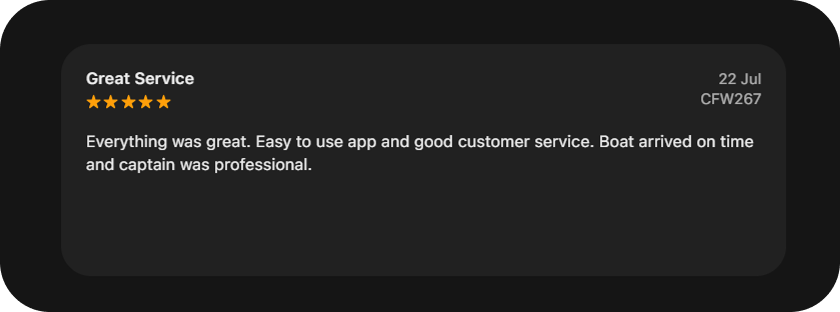
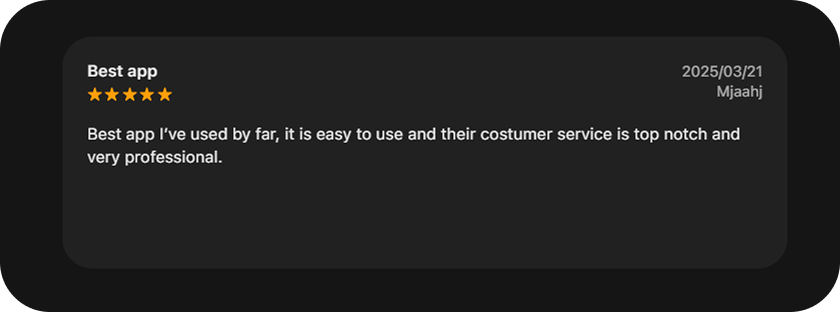
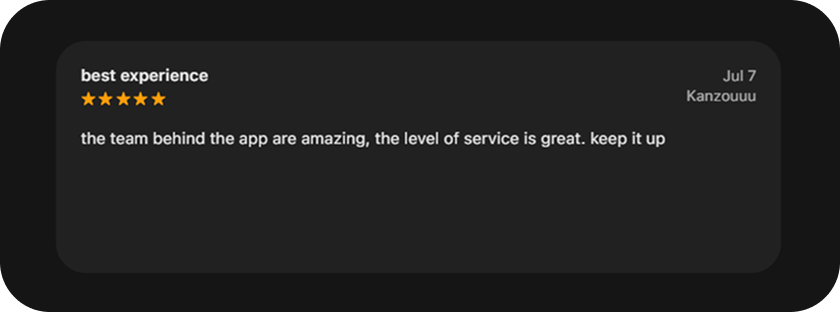
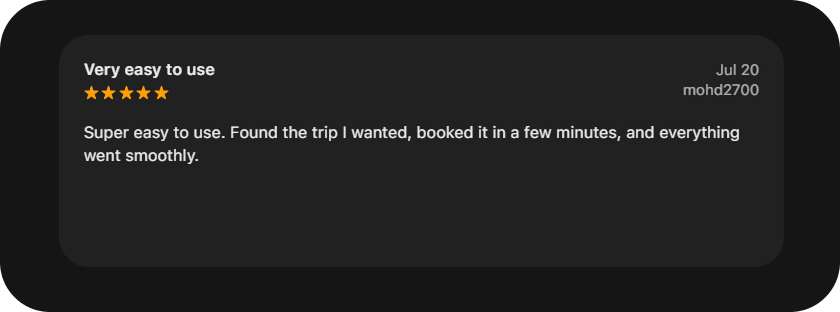
Top App Store Reviews

✓ Key Themes: Ease of use is #1 win. Speed of booking and quality of service praised consistently. No UX complaints.

Phase 2 Roadmap: Learnings & Priorities

01

Calendar View Complexity

Complaint

"Lack of direct multi-calendar viewing for private chalet planning."

Why it matters

Users want to see availability across 2-3 vessels at once. Currently single-vessel view creates friction for group planning (users screenshot + WhatsApp).

Phase 2 Fix

Build side-by-side comparison view for up to 3 vessels with synced calendars.

02

Vendor Dependency

Observation

User experience depends on operator punctuality and equipment quality.

Why it matters

Marketplace risk, not a UX problem. We need better operator vetting and visible SLA metrics pre-booking.

Phase 2 Fix

Operator performance dashboard (response time, cancellation rate, customer satisfaction).

What Worked: Design Validation

✓ Vendor Verification Increased Confidence

All 7 users browsed available listings without hesitation. Verification badges and ratings visibility eliminated discovery friction.

✓ Linear 3-Step Checkout Reduced Abandonment

43% conversion rate atypical for marketplace launches. Checkout flow aligned with user mental model: browse → select → pay.

✓ Multiple Payment Options Prevented Drop-Off

KNET, Apple Pay, and bank transfer each captured 20–40% of transactions. Removing any option would have cost approximately 20% in completion rate.

✓ Persistent Context Drove Repeat Activity

66% of users rebooked within 30 days. Wallet, saved favorites, and chat continuity reduced refamiliarization friction on return visits.

✓ Algorithmic Date Holds Built System Trust

Weather-triggered holds reduced support load by 85% versus operator-driven decisions. Users trusted rule-based logic over discretionary judgment.

✓ Navigation Priority Outperformed Feature Depth

Group booking discovery climbed from 14% → 42% through prominent top-level placement alone. UI visibility matured faster than feature sophistication.